Soy And Ginger Salmon With Green Beans
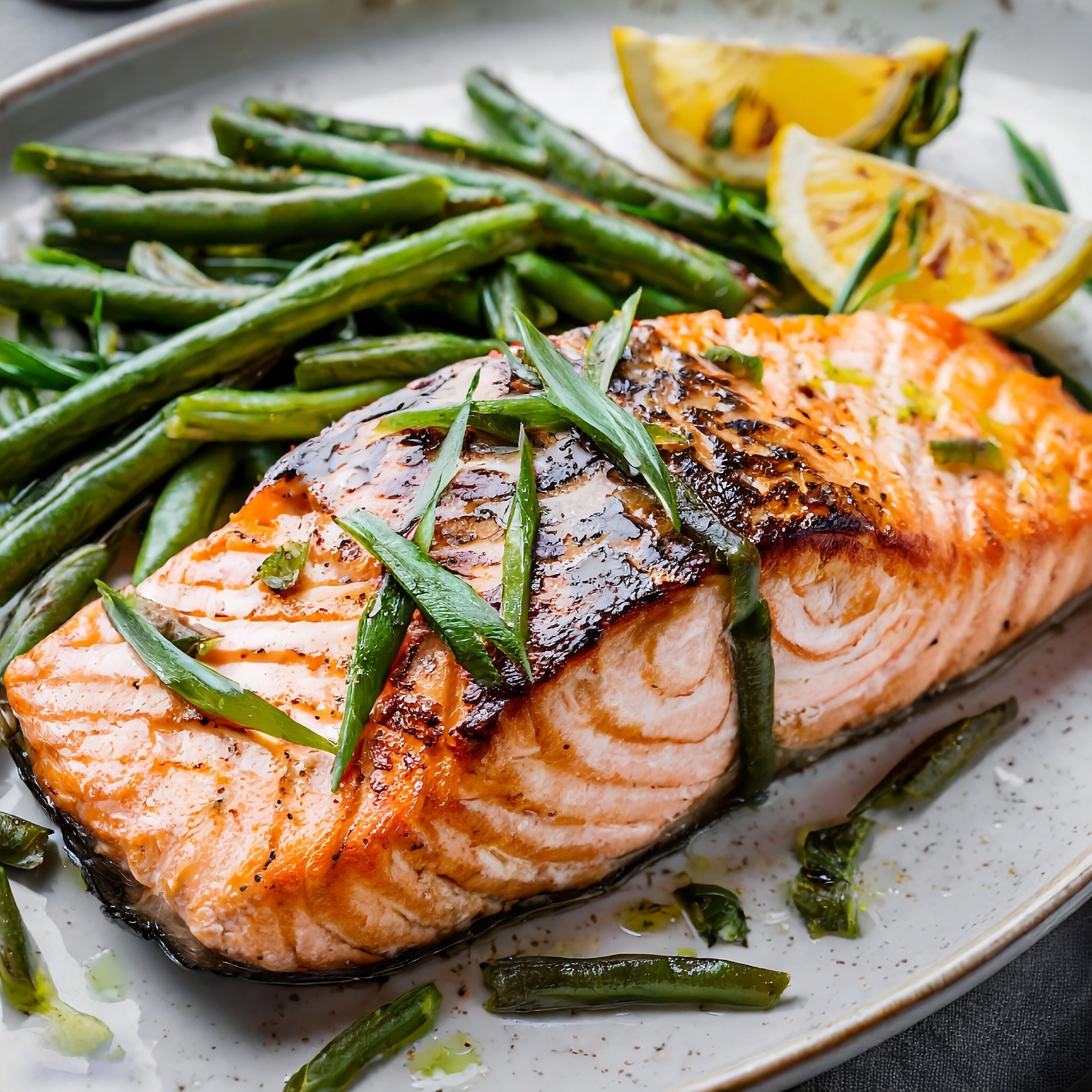
An Asian twist featuring, ginger, honey and garlic in the delicious sauce.
Serving size: 4
Ingredients
1.5 pounds of salmon, cut into 4 equal portions
¼ cup of Soy sauce
1 tbs of rice vinegar
1 tbs olive oil
Ground ginger spice to taste
2 cloves of garlic
1 tbs honey
1 lemon
Scallions to taste
1 bag of fresh cut green beans
APPROX. Timing
Prep Time: 10 minutes
Cook Time: 20 minutes
Total Time: 30 minutes
Instructions
Make the sauce. In a small mixing bowl, whisk together the soy sauce, rice vinegar, olive oil, ginger, garlic, honey, and lemon juice. Slow heat the oil in a large saucepan over low heat. Add the minced garlic.
Season the salmon & bake. Place the salmon portions skin side down in a baking dish. Pour the sauce over the salmon and bake for 400°F 15-20 minutes, until the salmon reaches an internal temperature of 145°.
Garnish. Remove from oven. Spoon sauce over the salmon and garnish with the scallions.
Steam the green beans for 3 minutes once the water is boiling. Steaming green beans is so incredibly easy. All you need is a colander, pot or a deep skillet with a lid, and a steam basket. The steam basket holds the green beans just above the boiling water, so they cook evenly and makes it really easy to lift the green beans out of the pot once cooked. After I steam the beans I like to saute lightly with garlic and red pepper flakes.
Tips and variations
If you prefer a grilled soy ginger salmon, you could use the same soy ginger glaze recipe but cook the fish on the grill instead.
Instead of the green beans you can prepare a earthy green salad and cook some wild rice on the side.
Ingredients’ Goodness
Salmon: It is an excellent source of omega-3 fatty acids, particularly EPA and DHA. These fats have been shown to reduce inflammation, improve heart health, and protect against cognitive decline. Salmon is one of the few animal sources of vitamin D, which is essential for bone health. It is a source of high-quality protein that supports muscle growth, repair, and overall health. It also contains astaxanthin, a potent antioxidant that may protect cells from damage and reduce inflammation.
Wild salmon is a good choice if you prioritize:
A lower fat and calorie count.
Higher levels of vitamins, minerals, and natural astaxanthin.
A more natural diet and living environment for the fish.
A firmer texture and richer, more intense flavor.
Farmed salmon is a good choice if you prioritize:
More affordable and widely available salmon.
Higher total fat content, including omega-3s, which can result in a more tender texture.
A more sustainable option that helps reduce the pressure on wild fish populations.
Ultimately, both are healthy options that provide beneficial omega-3 fatty acids and high-quality protein.
Soy and honey sauce: Soy sauce and honey sauce can offer health benefits including soy sauce's antioxidants and digestive support from fermentation, and honey's antimicrobial properties and rich antioxidant content. However, the high sodium in soy sauce is a significant drawback, so moderation and low-sodium varieties are recommended. Honey should also be consumed in moderation due to its sugar content. Look at it as a monthly treat!
Ground ginger: Gingerol, a bioactive compound in ginger, possesses potent anti-inflammatory properties. It can help reduce pain, swelling, and arthritis symptoms. Ground ginger aids in digestion by stimulating saliva and gastric juices. It can relieve nausea, vomiting, and indigestion. It is rich in antioxidants, which combat free radical damage and protect cells from oxidative stress. This may help reduce the risk of chronic diseases such as heart disease and cancer.
Rice vinegar: A traditional Asian condiment made from fermented rice. It helps regulate blood sugar levels by slowing down the absorption of glucose from the digestive tract. Some studies suggest that rice vinegar may help lower cholesterol and blood pressure, reducing the risk of heart disease. mRice vinegar may promote feelings of fullness and reduce calorie intake. The acetic acid in rice vinegar can help improve digestion by stimulating the production of stomach acid.
Olive oil: Contains monounsaturated fats, Omega 6, which help lower LDL (bad) cholesterol and raise HDL (good) cholesterol. This reduces the risk of heart disease. It is rich in antioxidants, including polyphenols and vitamin E. These antioxidants combat oxidative stress and inflammation, protecting cells from damage.
Considerations for consumption
The recommended daily intake of olive oil is up to 1 tablespoon for adults.
Choose extra virgin olive oil for the most health benefits.
Use olive oil in moderation as it is high in calories.
Garlic: Enhances heart health, stronger immunity, and anti-inflammatory effects. To maximize these benefits, it is generally recommended to consume garlic raw, since heat can reduce the potency of allicin.
Raw garlic provides the most health benefits, as it contains higher concentrations of allicin, the compound that gives garlic its antimicrobial and immune-boosting properties. To maximize benefits when cooking, crush or chop garlic and let it sit for about 10 minutes before adding it to your recipe. This allows the allicin to form. Also, add garlic toward the end of the cooking process to avoid excessive heat, which can destroy the allicin.
Lemon: An excellent source of vitamin C, an antioxidant that supports immune function, collagen production, and protects against cellular damage. The citric acid in lemons stimulates saliva production and gastric juice, which helps improve digestion. The fiber in lemons also promotes regular bowel movements.
Scallions: Rich in vitamins A, C, and K. Contain folate, potassium, and calcium. Low in calories and fat
Green beans: An excellent source of essential vitamins and minerals, including vitamin K, vitamin C, folate, magnesium, and potassium. They contain antioxidants such as flavonoids and carotenoids, which help protect cells from damage and reduce inflammation. The high fiber content in green beans promotes healthy digestion and helps regulate blood cholesterol levels, reducing the risk of heart disease.