Losing Muscle Mass As We Age
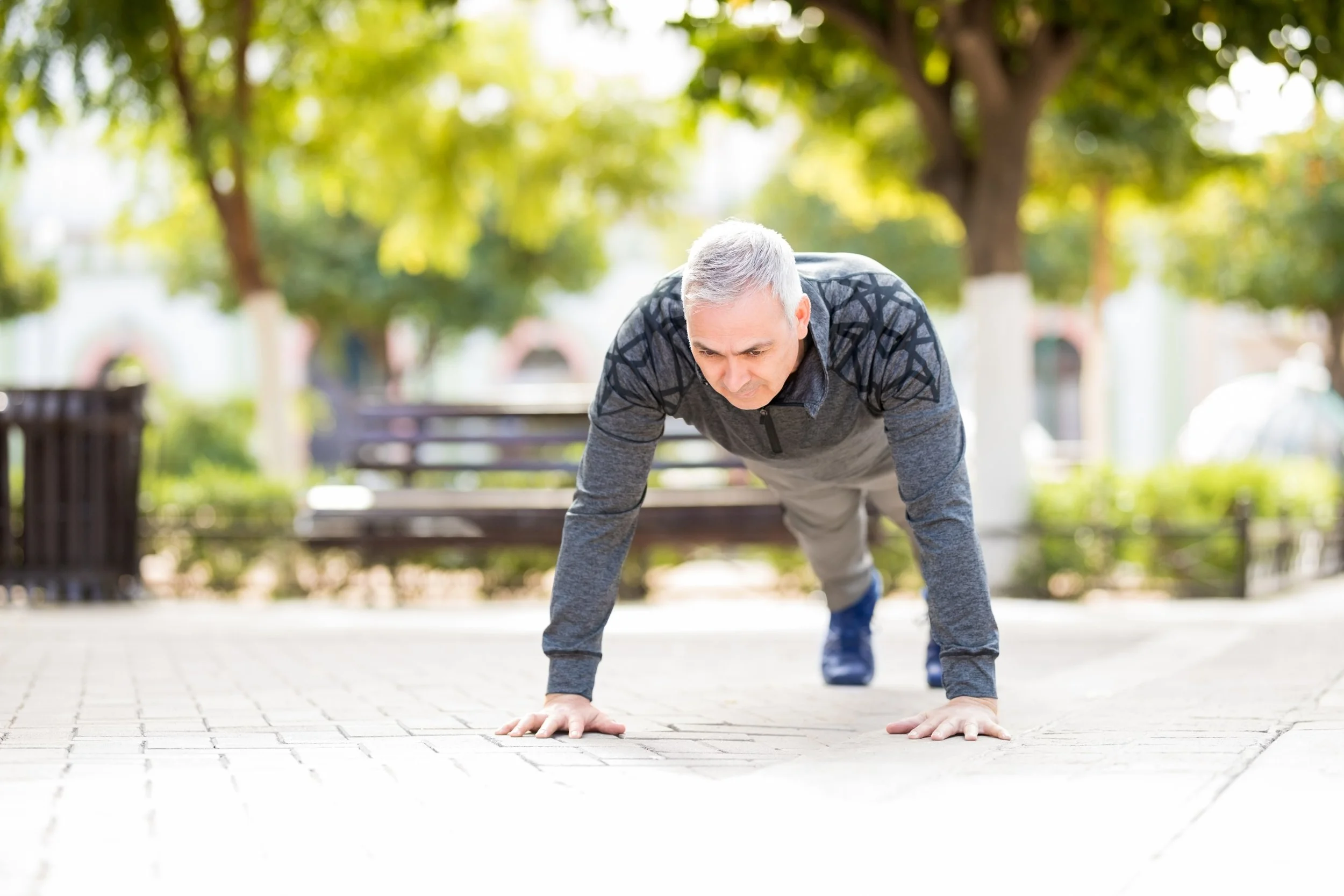
The statistics are quite alarming. Muscle mass declines between 3% and 8% per decade starting in your 30s, and the rate of loss accelerates even further after age 60.
The good news is that it’s never too late to get moving, and resistance training has been shown to increase muscle mass, improve bone density, and boost metabolic health in perimenopausal and postmenopausal women.
After discussing the topic with a several personal trainers, all agree in the power of push-ups in women of all ages, but especially those over 50. And before you think, "There's no way I can do a push-up," hear me out: you can, and you should try it.
Push-ups are a foundational movement that builds not only strength, but also confidence, autonomy, and longevity. Below, I'll explain why push-ups are so essential as we age, with insights from an exercise-focused physical therapist and a menopause-focused gynecologist, as well as easy modifications if you're a beginner looking to get started.
So why we concluded push-ups are important specially after 50? “Strength and endurance training is essential for women over 50,” says board-certified ob-gyn Dr. Jessica Shepherd, who serves on the Medical Advisory Board of the nonprofit Let’s Talk Menopause. “It’s at this stage that a significant hormonal shift occurs, which also affects muscle mass.”
Sarcopenia, or age-related muscle loss, is real, and resistance training is one of the most effective ways to gain strength, maintain bone density, and prevent osteoporosis. “When muscles contract, they pull on the bones,” explains Dr. Shepherd. “That stress, whether through body weight or weights, stimulates the creation of calcium deposits, which kick-starts the bone-building process.” While there are many types of strength exercises, mastering your own body weight through push-ups is especially valuable. It not only strengthens your upper body, but also your core, posture, and endurance. “I always emphasize push-ups in my clinical practice,” she notes. “They’re simple, effective, and can be done anywhere.”
Push-ups are a smart way to counteract muscle loss, upper-body weakness, and core instability. They strengthen areas that tend to weaken with age, such as the chest, shoulders, triceps, and abdomen. These muscles play an essential role in posture, balance, and everyday functional tasks such as lifting objects, carrying weight, or protecting yourself from falls. They also help protect your joints and maintain bone density, which is increasingly important in postmenopausal women due to declining estrogen levels. In fact, of the millions of women who enter menopause worldwide, more than 70% will experience musculoskeletal symptoms, and 25% will be limited by them during the transition from perimenopause to postmenopause. Resistance training stimulates muscles to build strength, which improves functionality and the ability to generate force quickly, which is essential for everyday activities. Improving strength and power not only supports physical function but also contributes to greater longevity and quality of life.
I personally know how beneficial—yet challenging—push-ups can be, and that’s precisely why they’re so powerful. That doesn’t mean I like to do them, I find it hard, but if you learn how to do them well and implement accommodations to build up your strength, it becomes easier. To do one well, you need strength in almost every major muscle group, which represents a true full-body functional test. That is why building strength at the beginning with the appropriate accommodations is the key to avoid unwanted injuries.
As an important note, you don’t need to wait until you are 50 to get started, the sooner you start the stronger and healthier you become as you age.
Push-ups require no equipment, are accessible to most people, and offer a full-body compound movement that you can do virtually anywhere. They primarily work the chest (pectorals), shoulders (deltoids), triceps, and core, including the deep stabilizing muscles of the abdomen and lower back. These muscles are vital for maintaining upper body strength, improving spinal alignment, and supporting overall mobility.
There’s also subtle activation of the glutes and legs as stabilizers, which allows for total body integration in a single movement. But most interestingly, push-ups train neuromuscular coordination, the communication between the brain, nerves, and muscles. As we age, maintaining this system is key to maintaining balance and reaction time. And despite their popularity, push-ups can be easily adapted to all fitness levels. The important thing is to start from where your body is comfortable and progress steadily. No matter where you start, the goal is to progress. With the right support and modifications, you can build the strength needed to master push-ups over time.
How to Do Push-Ups Correctly
Standard Push-Up Technique:
Start in a high plank position, with your hands slightly wider than shoulder-width apart and your fingers pointing forward. Your shoulders should be aligned just above your wrists. Engage your core, squeeze your glutes, and form a straight line from your head to your heels. Lower your body with control, keeping your elbows at about 45 degrees to your torso—not too wide or tucked in. Stop when your chest is just above the floor, or as far as you can maintain good form. Push back up with your palms, keeping your body in a straight line. Start with modifications, such as wall or incline push-ups, and focus on technique as you build strength. Doing push-ups on your knees is a great modification too.
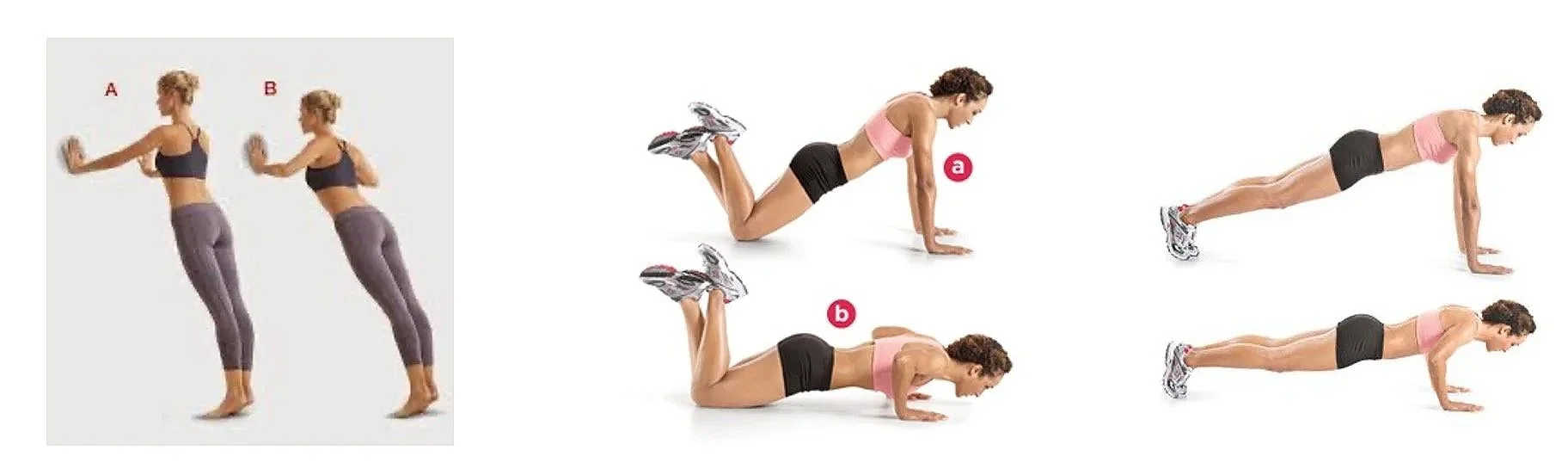
Doing push-ups three times a week as part of a comprehensive strength routine is acceptable. This frequency allows muscles to adapt and recover, while progressively building strength. When it comes to the number of repetitions, quality is more important than quantity. Start with a manageable number of repetitions, even 5 to 10 well-executed push-ups can be effective. Focus on progressing over time, whether by increasing repetitions, difficulty, or pace. The important thing is to train until you feel challenged, without sacrificing technique.
With consistency and the right approach, you’ll develop the strength and control needed to master push-ups at any age. Strength has no age, and it’s never too late to start resistance training. A functional, full-body movement, push-ups activate multiple muscle groups and require no equipment, making them as effective as they are accessible. With consistency, you can regain your power, restore your functionality, and feel strong in your body, one push-up at a time. So, what are you waiting for?
Wellness to your health,
Virginia