Dairy, Fats, and Grams
If you’ve spent any time reading health articles or scrolling social media lately, you know how exhausting it can be to figure out what to eat. One day dairy is labeled toxic, and the next, cottage cheese is trending on every video feed as the ultimate health hack. Avocados are praised as a superfood, but then you're warned they’ll make you gain weight if you eat more than a slice. Bread is completely demonized—until traditional sourdough enters the chat. And don't get me started on the expectation to weigh your food and track every single gram on an app. I got tired of the confusion, so I decided to strip away the extreme rules and look at what actually works for real life.
Take dairy, for instance. Dairy isn't universally bad, but the type of dairy matters immensely. Unless you have an allergy or severe sensitivity, clean, traditional dairy can be a wonderfully nutrient-dense choice. Fermented options like plain yogurt, kefir, or protein-packed cottage cheese supply essential amino acids that support your brain health and tissue repair. Cottage cheese in particular is packed with casein protein—a slow-digesting protein that breaks down over five to seven hours, making it a fantastic morning power-up to stabilize blood sugar, a late-afternoon snack to bridge the gap to dinner, or even a pre-bedtime bite for overnight muscle repair.
Of course, it helps to understand what dairy actually is under the hood: it provides high-quality protein, healthy saturated fats that support brain cell membranes, and lactose—which people often forget is simply a naturally occurring milk sugar. Because lactose is a sugar, your body needs lactase to break it down, which is why fermented options like yogurt are so much easier on your stomach. The golden rule here is to avoid ultra-processed dairy altogether—like sugary flavored yogurts or artificial cheese slices—and stick to clean, organic, minimal-ingredient sources.
Now, if you get hit hard by seasonal allergies, sinus pressure, or post-nasal drip, dairy might need a little extra attention. Science shows that dairy doesn't necessarily produce more mucus in your lungs, but its creamy emulsion mixing with your saliva temporarily coats your throat, creating a sensation of thicker phlegm. On top of that, aged cheeses and processed dairy contain higher levels of natural histamines, which can aggravate sinus inflammation if your body is already overreacting to pollen. If dairy bothers your sinuses during allergy season, listen to those cues. You can easily pivot to fermented non-dairy options like kombucha, kimchi, or sauerkraut for gut health, or swap cottage cheese for plant-based yogurts boosted with pea or hemp protein.
The same balanced mindset applies to healthy fats like avocados, extra-virgin olive oil, and nuts. These fats nourish your brain cells and keep your system running smoothly, providing steady energy throughout your workday. But because fat is energy-dense—carrying nine calories per gram compared to four for protein and carbs—it is possible to overdo a good thing. Enjoying half an avocado or a small handful of nuts gives you all those brain-boosting benefits without accidentally overshooting your daily energy needs.
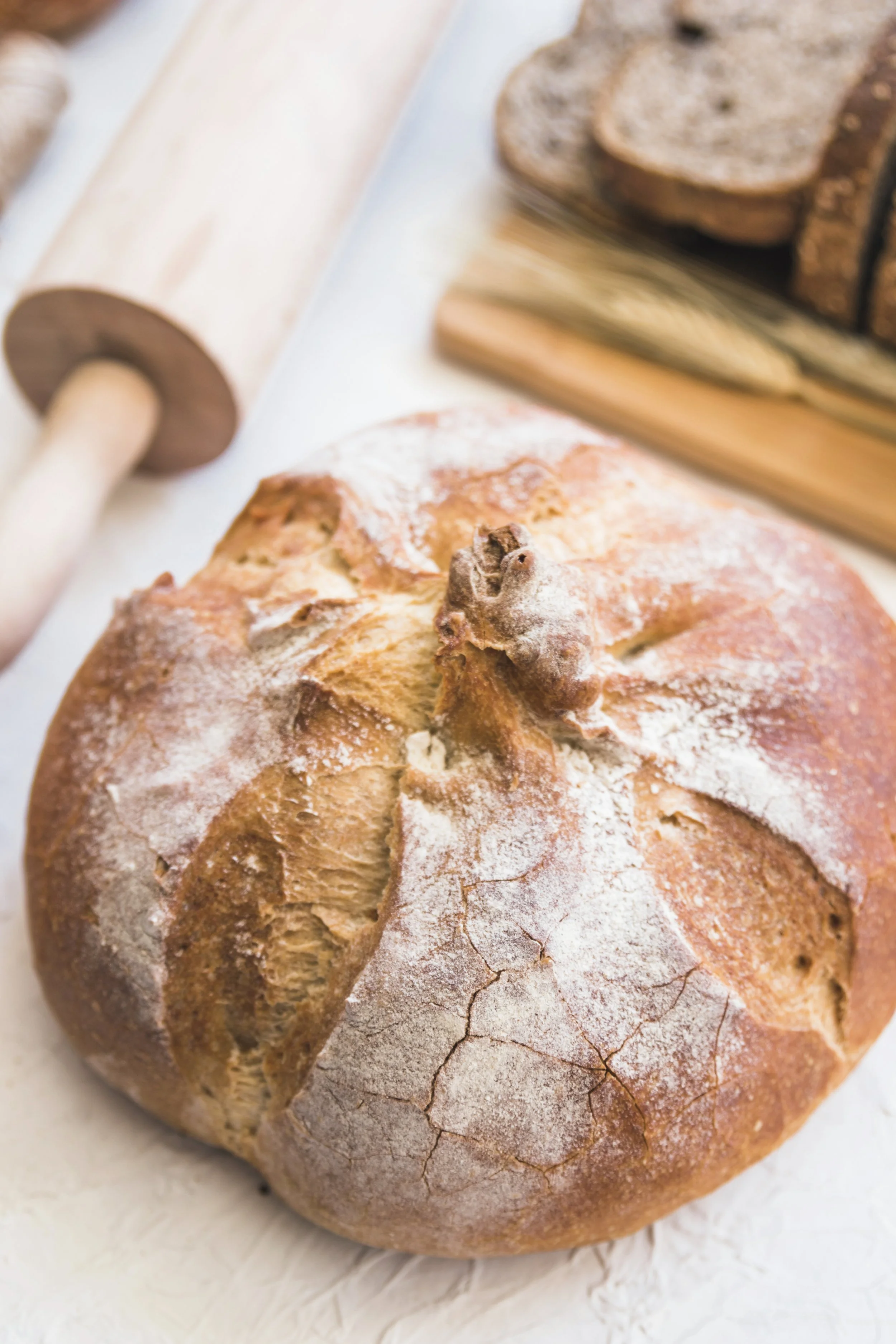
And speaking of carbohydrates, let’s talk about bread. "Carbs are bad" is one of the most persistent myths in diet culture, leading many people to banish bread completely. But traditional sourdough bread is a completely different story. Real sourdough relies on a slow fermentation process using wild yeast and natural bacteria, which breaks down phytic acid so your body can absorb minerals like zinc and iron, while pre-digesting much of the gluten to make it far easier on your gut. Thanks to the organic acids produced during fermentation, sourdough has a lower glycemic index than regular store-bought white or whole-wheat bread, offering sustained brain power rather than a sudden sugar spike and crash.
On a personal note, I recently found a local spot called Kneady Mama that makes delicious, authentic sourdough bread and delivers right here in Boston on Tuesdays and Fridays. It is worth every bit of the $14 per loaf! But my ultimate goal is to learn from my personal favorite baker: my lovely stepdaughter. She makes the absolute best sourdough bread with admirable passion, care, love, and kindness. Making my own is definitely on my horizon. Baking real sourdough requires being truly present in the moment, having patience, and understanding the fermentation process—the rest is having fun and enjoying the most delicious reward.
Ultimately, trying to weigh every bite of food and log macros down to the last decimal turns eating into a full-time job. For most of us, counting grams isn't a long-term, sustainable habit—it's a roadblock. Instead of obsessing over exact numbers, you can easily guide your portions using simple, visual cues right at your fingertips. Think of a palm-sized portion for high-quality protein like grilled chicken, black beans, or cottage cheese, a cupped hand for complex carbs like warm oats, brown rice, or sourdough bread, a thumb-sized portion or small handful for healthy fats like extra-virgin olive oil or walnuts, and two open fists to fill half your plate with fresh veggies and berries
Timing these foods around your body's natural rhythms makes an even bigger difference. Starting your morning with a blend of protein, healthy fats, and sourdough stabilizes your blood sugar and keeps hunger hormones quiet well into the afternoon. A lunch rich in fiber and lean protein maintains steady brain power without the dreaded mid-day slump. Because casein protein breaks down so slowly, enjoying cottage cheese in the late afternoon acts as a perfect bridge to stop cravings before dinner. As for dinner, keeping it light and early is key. Opting for a balanced plate of fiber-rich vegetables, healthy fats, and easy-to-digest protein—while finishing your meal two to three hours before bedtime—gives your digestion time to wind down. This allows your body to focus on deep sleep, cellular repair, and overnight recovery rather than heavy digestion.
Pairing these visual portions with mindful eating changes everything. A wonderful habit to adopt is eating until you are about 80% full—a traditional practice that simply means stopping when you are no longer hungry, rather than when you feel completely stuffed. Because it takes roughly twenty minutes for your stomach to signal your brain that it is satisfied, pausing when you feel about 80% full gives your digestion room to breathe. When you listen to those subtle cues, eat mindfully, and observe how different foods affect your energy throughout the day, you realize you don't need a scale or an app to nourish yourself well.
How do you handle all the conflicting nutrition advice out there? Are you sticking to clean sourdough and organic dairy, or experimenting with plant-based alternatives?
Wellness to your health,
Virginia